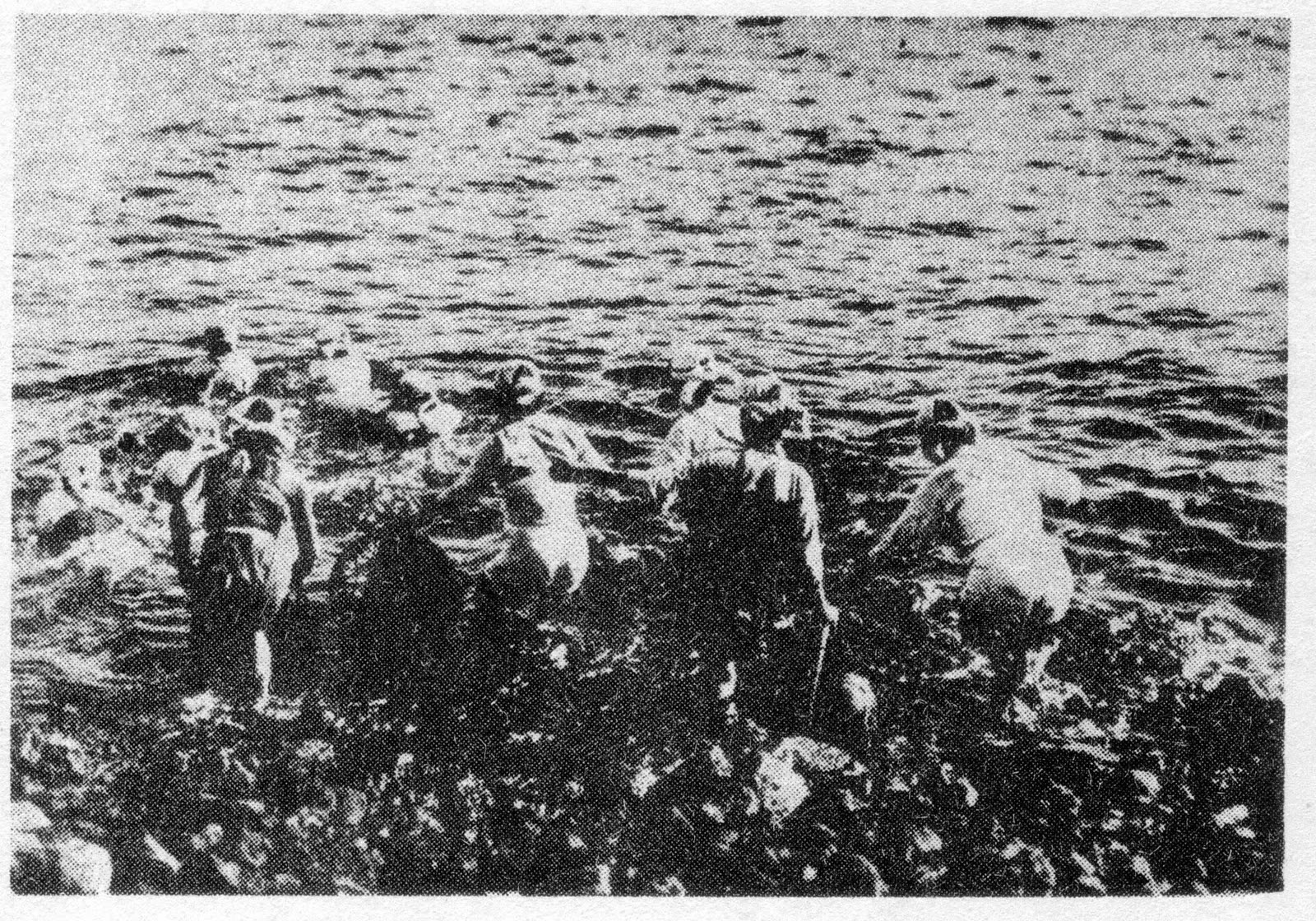
On the volcanic island of Jeju, south of the Korean peninsula, women in their 60s, 70s and 80s go out into the sea every morning during the season. Without tanks and without oxygen, they dive down to around 10 metres – experienced divers even deeper – and gather sea urchins, abalone, sea snails and seaweed. They are called haenyeo: sea women.
Sumbisori – the sound of the sea women
When a haenyeo comes up to the surface, she blows the air out with a high, whistling sound. It is called sumbisori, and can be heard far across the water. The sound is both a breathing technique – a strong exhale before the next inhale – and a signal to the others that she is safely up.
For adults with some experience: one email every morning for 14 days – no time targets, never in water.
UNESCO heritage
In 2016 the haenyeo culture was inscribed on UNESCO's list of the Intangible Cultural Heritage of Humanity. It isn't only the diving that is unique, but the whole community around it: the women organize themselves in cooperatives, share the sea according to experience, and have their own rituals and songs.
What the researchers have found
In 2025 a research group led by the geneticist Melissa Ilardo at the University of Utah published a study of 30 haenyeo, compared with women from Jeju who don't dive and women from the mainland. During simulated dives, the haenyeo's pulse dropped more than in the others – a stronger diving reflex that saves oxygen. The researchers also found genetic variants that may matter, but stress that lifelong training plays a big role.
Read more about the diving reflex – because you have it too.
A tradition that is disappearing
The number of haenyeo has fallen sharply since the 1960s, and most of those who dive today are over 60. Few young women choose the profession. Jeju therefore has its own haenyeo schools and a museum, and the authorities support the tradition. If you visit Jeju, you can see them at work in several places along the coast – and eat what they picked up that same morning.
What can we learn?
- Calm, efficient movement saves oxygen.
- A strong exhale after the dive and calm breathing between dives.
- Community and a buddy system – haenyeo never dive alone.
Top image: Haenyeo on Jeju (see image credits). This article is general information and does not replace medical advice.